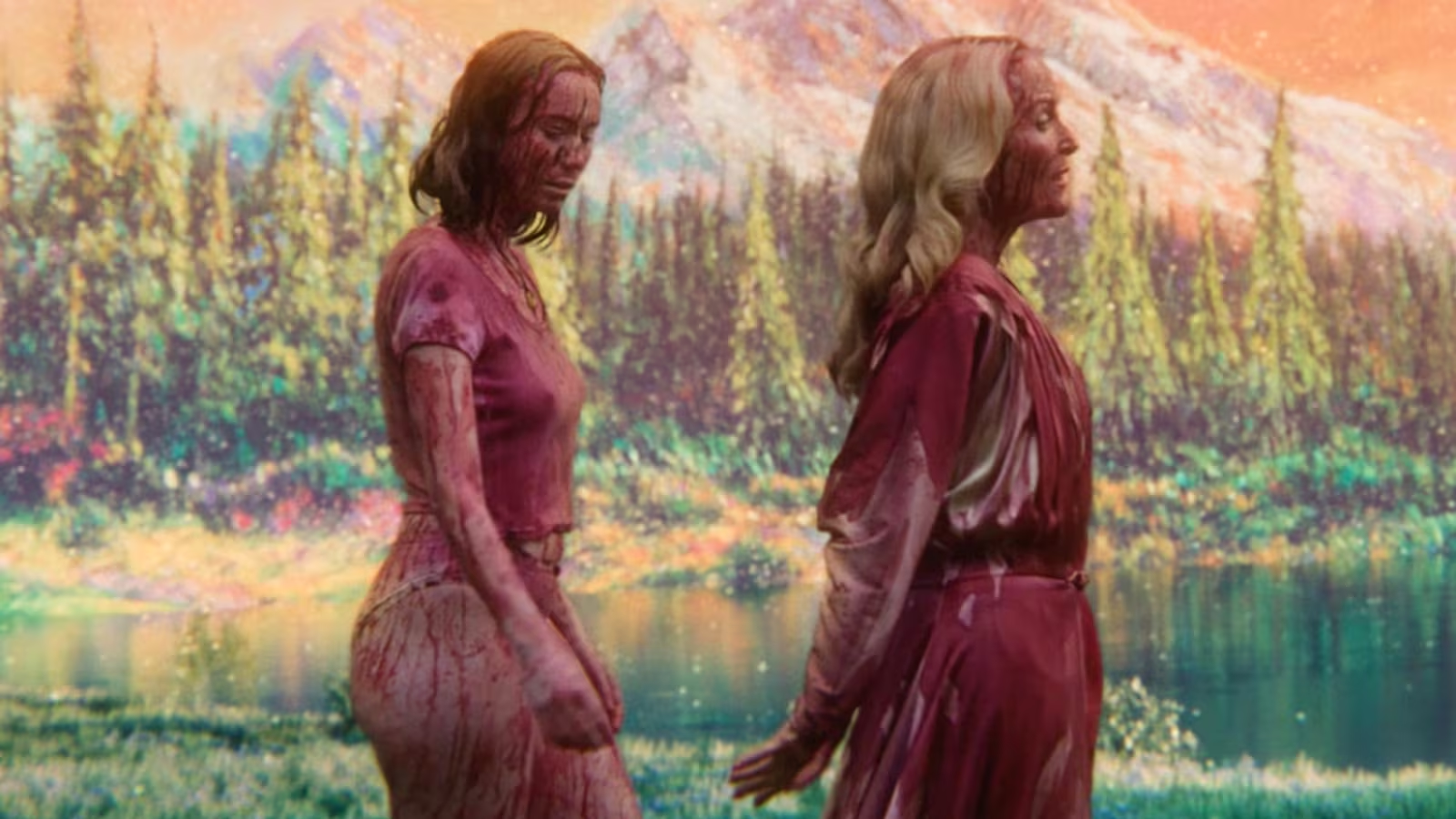
Good thing I’m not monetized, because today we’re talking about two integral parts of the human experience; sex and death. Two topics considered taboo in certain spaces and contexts, and two terms that are actually more similar than you may first think. They are deeply physiological, command a profound surrender of mind and body and, for maybe the tiniest modicum of time, it probably feels really good. They are inevitabilities we all must make peace with in some way or another, and that’s essentially what Jane Schoenbrun’s new flick is all about. Maybe. I think?
This film is yet another glimpse into the director’s own personal journey of self discovery, following the reckoning of growing up in the age of the internet in We’re All Going to the World’s Fair and the acceptance of one’s gender identity in I Saw the TV Glow. These films have shown that Schoenbrun is one of the most unique and personal filmmakers working today, if not one of the most perplexing. While their work is far from being the most abstract puzzle boxes you’ll find in film, they do take a certain mixture of focus and surrender to truly get the full picture; something not everyone is always willing to do.
But Teenage Sex and Death at Camp Miasma is indicative of their journey into becoming a bigger and more refined filmmaker. This is perhaps Schoenbrun’s most accessible flick to date, but not at the sacrifice of their style, inspirations and voice. Draped in a love letter to classic slasher films and the confusing impressions they’ve left on us all, this film is less concerned with deconstructing the genre like so many others have set out to do, instead taking things to a much deeper place. This, ironically, makes this film much less of a horror film than their previous outings, though we do get treated to some over the top displays of cartoonish violence and blood. But this swerve from one thematic focus to another may leave watchers whiplashed or maybe even robbed of a story that more directly confronts our relationship with the complicated world of horror. But nonetheless, this is further proof that Schoenbrun is continuing to create work unlike anything you’ll see today, potentially for better or for worse.
Captaining our voyage through self discovery is Kris, played by Hannah Einbinder, a young filmmaker hired to reboot a dead horror franchise who seeks out the final girl from the original film, Billy Presley, to star in the new film. It sounds a little cliche at first, but their dynamic is actually structured in a fairly interesting way. Billy, played by Gillian Anderson, was actually Kris’ sexual awakening in the original film, which is wild considering it’s during a scene where she’s essentially taken advantage of. But that prickliness is the underlying conflict of the film; what does it mean about the way we view intimacy and how do we face it head on? Einbinder is awkwardly shy and wide eyed as Kris, whose obsession with horror and film has served as both the catalyst and roadblock for own relationship with sex. Her journey to creating the best remake she can while still maintaining artistic integrity slowly begins to morph and change into her true obsession; Billy. There’s something Billy captured in that old film, and whether she fully understands it or not, Kat is determined to find it. Gillain Anderson is Kat’s reclusive guide through self understanding, someone who has lived through the confusion before and can help her better unpack what she has going on. Put these two together and things get intimate, steamy, and goofily sexy in a way.Â

The film is also a cavalcade of moments of “hey, I know that person” if you’re a film obsessed little weirdo like me. Jack Haven, the star of Shoenbrun’s last film I Saw the TV Glow, sneaks in a little screentime as the aptly named, HVAC headed killer, Little Death. Zack Cherry does a great job nailing that “middle-aged man playing a young adult” archetype whenever the film switches focus to the in-universe Camp Miasma film. Eva Victor, breakout director and star of last year’s Sorry, Baby is nearly unrecognizable as a mohawk-sporting DJ. And classic face actors like Patrick Fischler and Dylan Baker also get their time to shine in small but memorable ways.
The world of the snowy camp Kat and Billy find themselves connecting in is picturebook-esque, intentionally feeling like you’ve stepped into a fantasy world. Matte painting backdrops, geysers of ruby red blood and fluffy fake snow sell the otherworldly setting of this summer camp. It gives it the feeling of existing outside our world as we know it, being an encapsulation of the artificial wonder the Camp Miasma films thrived on. But, for a horror film, a slasher one at that, you may be disappointed to find the horror isn’t nearly as prevalent here as it is in the director’s past work. While Schoenbrun’s work has always been unconventional in the realm of horror, it still elicited some truly visceral reactions from me because of how deeply they managed to cut. But camp is more on the menu this go around, meaning the horror is more exaggerated for the sake of laughs rather than dread. There are some sneaks of unsettlingness, like a very obvious homage to the ending of cult classic Sleepaway Camp. But most of the time you’re getting buckets of blood that spurt out of heads and limbs as Little Death slashes and stabs his way through the usual suspects. While I’m definitely not complaining, I definitely would have liked to feel as queasy as I did watching Schoenbrun’s past films. But that’s where the sound design comes in, which is so heightened, so direct and so imposing that it did leave me a little squeamish. Would you believe me when I say that the most unnerved I felt this whole film was when the two main characters ate a bucket of chicken?
Schoenbrun’s love for classic horror is more than apparent here, as well as their understanding of the current state of the genre. As a queer filmmaker, they probably have more insight than most into how the genre has a troubled history with things like misogyny and gender, and how these issues persist in new ways with overly PC approaches to inclusion and diversity. There are minor criticisms of this approach to filmmaking here that almost feels like a self-inflicted wound to the director themselves through Kat, who feels very much like an extension of the director. This relationship with art makes up a good chunk of the first half of the film, though the introspection into horror becomes lessened, or at least less apparent, going into the third act. Truthfully, I’m kind of glad for this pivot, as these analyses have been talked about to death recently with middling success through films like the new Scream movies or In a Violent Nature to a degree. But it’s also because this film, when making homages and trying to wink-wink, nudge-nudge the audience, threatens to fall into those same pitfalls that cursed those other films. Schoenbrun’s style of humor isn’t gonna be for everybody, sometimes coming off as cringey at best and self-indulging at worst. Maybe I’m just tired of summer camps and slashers being intrinsically linked. The original Friday the 13th is probably the worst out of the classic slasher films. That’s right, I said it.
But this thing really gets salvaged when it settles into its journey of understanding what your body and mind needs to feel pleasure. It can be scary, dangerous and even life changing, and I think the final act finds a way to run the parallels of being murdered and having an orgasm incredibly effectively. It’s far and away Schoenbrun’s least depressing film of the trio, which was probably the right call. While I Saw the TV Glow emphasized the anxiety of letting too much time pass you by, this film is all about patience, care and finding the right way to take that first step. Its handling of themes of voyeurism, submission and separating your mind from your body are all handled expertly well, giving you a horror film you can actually feel good about being turned on while watching. Our prayers have finally been answered.
Driven by their own specific interests yet still finding ways to use it to target the deeper sides of ourselves, Jane Schoenbrun continues to deliver the kind of fresh voice and approach horror ultimately benefits from. It’s an intriguing vehicle that may not completely come full circle as cleanly as I might have liked, but if anything, I feel compelled to watch it again to see if there’s even more to unpack. It’s clear Schoenbrun has been unpacking a lot over the past few years, and it’s truly incredible to see such an interesting visionary march forward uncompromised by an industry that’d rather swallow you than savor you. It’s not nearly as much of a mind f*ck as their past few films, so if you haven’t already, maybe now’s your chance to enter into this world of macabre self discovery. Truly, what do you have to lose? After all, you can always just turn it off.
RATING
PakarPBN
A Private Blog Network (PBN) is a collection of websites that are controlled by a single individual or organization and used primarily to build backlinks to a “money site” in order to influence its ranking in search engines such as Google. The core idea behind a PBN is based on the importance of backlinks in Google’s ranking algorithm. Since Google views backlinks as signals of authority and trust, some website owners attempt to artificially create these signals through a controlled network of sites.
In a typical PBN setup, the owner acquires expired or aged domains that already have existing authority, backlinks, and history. These domains are rebuilt with new content and hosted separately, often using different IP addresses, hosting providers, themes, and ownership details to make them appear unrelated. Within the content published on these sites, links are strategically placed that point to the main website the owner wants to rank higher. By doing this, the owner attempts to pass link equity (also known as “link juice”) from the PBN sites to the target website.
The purpose of a PBN is to give the impression that the target website is naturally earning links from multiple independent sources. If done effectively, this can temporarily improve keyword rankings, increase organic visibility, and drive more traffic from search results.
Jasa Backlink
Download Anime Batch
Related Posts
Cannes 2025: Jafar Panahi’s “It Was Just an Accident” Wins Palme d’Or | Festivals & Awards
[ad_1] Jafar Panahi’s “It Was Just an Accident,” a Death and the…
The Monkey – REVIEW & COCKTAIL – The Martini Shot
[ad_1] [embed]https://www.youtube.com/watch?v=nbNo_e1iMoQ[/embed] Anything, and I mean anything can be haunted.…
TIFF 2025: Dust Bunny, The Furious, Normal | Festivals & Awards
[ad_1] TIFF Midnight Madness has long been one of the…